
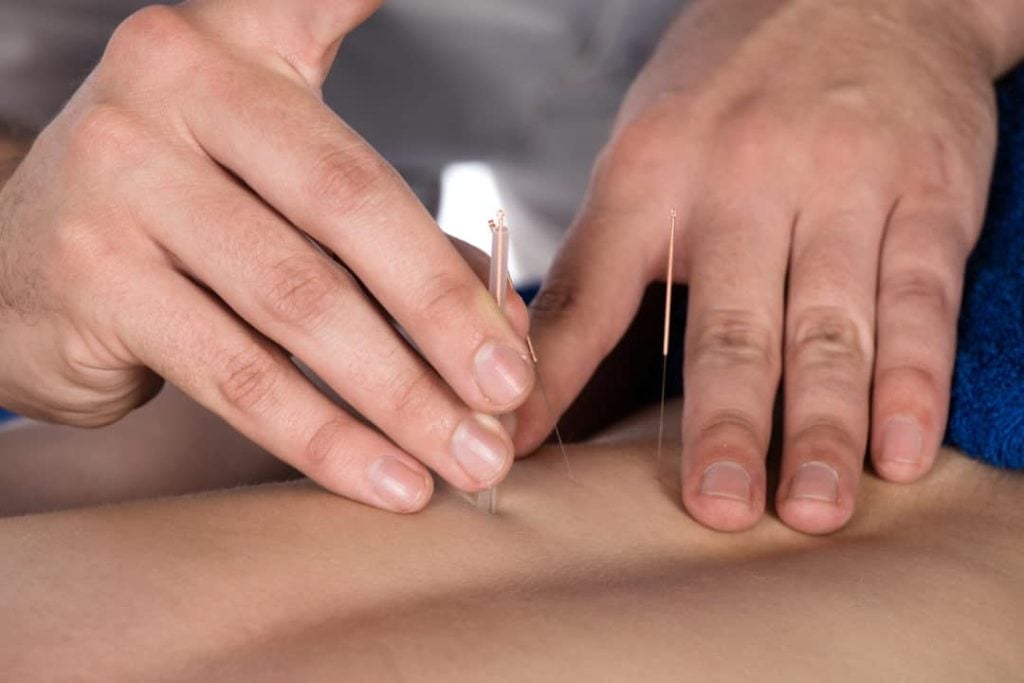
What to expect during a session
When considering dry needling, the first question most people ask is: Does dry needling hurt? The answer to this question will vary from person to person, as different individuals have different thresholds for pain and differing interpretations of input to the body. Some patients report feeling increased tightness and pressure, while some report pain very similar to their trigger point pain (aching, throbbing, radiating). Unlike with injections, in most cases the patient receiving dry needling will not feel the needle at all, and if they do, it will be a very brief and minor sensation. The pain they may feel is similar to the pain they feel when someone presses on or massages the trigger point. It can feel intense, but once the intensity passes patients often report significant relief from pain, tightness, and muscle spasm.
Another thing to be prepared for is that sometimes a muscle will contract during dry needling, which is called a local twitch response. This is very normal and indicates that the needle is in a good spot. Your physical therapist may move the needle in certain ways to elicit a better response from the muscle. This can temporarily increase symptoms, but will usually result in a better release of the muscular tension.
Throughout a dry needling session, your physical therapist will be checking in to make sure you are responding well to treatment, and that dry needling is being effective for your condition.
How does dry needling fit into the overall PT treatment plan?
Dry needling is a valuable therapeutic intervention, but in most cases is used as part of a multimodal approach and is most beneficial when used in conjunction with other treatment methods. Dry needling is mainly used in the recovery phase of treatment (first stage). The goal during the recovery phase is to decrease pain in order to allow the patient to progress into normal range of motion, improved strength, and ultimately improved tolerance to functional activities. Dry needling is used along with other manual therapy (hands-on) interventions to decrease pain and inflammation in order to help the patient progress to the next phase of rehabilitation.
Dry needling complements, but does not replace, other important aspects of physical therapy, like education and exercises. Once symptoms are under control, the patient will progress into working more on exercise and practicing functional tasks, with less need for hands-on treatment. However, dry needling is still available throughout the plan of care as needed if a flare up occurs or just to maintain progress in the muscles’ resting state. By reducing muscle tension first, dry needling can help other physical therapy treatments be more effective and comfortable.
If you would like to be evaluated and learn if dry needling is right for you, or if you have any questions, please call or text us! We’d love to help you. ☎️ (423) 228-8120
Elite Muscle Recovery
See what others are saying: Google Reviews